



Taking Ozempic or Mounjaro? Read This Before Your Plastic Surgery
In recent years, medications such as Ozempic, Mounjaro, Wegovy, Zepbound and other GLP-1/GIP-based treatments have become increasingly popular for weight management. At the same time, various peptide-based treatments are also receiving growing attention in the fields of health and aesthetics.
These treatments can lead to significant weight loss. However, for patients considering plastic surgery, it is important to look beyond the amount of weight lost. The timing of the medication, whether weight loss is still ongoing, whether the body has adapted to its new weight, and the potential effects of the medication on anesthesia and surgery should all be taken into consideration.
This is particularly important when planning procedures such as a facelift, neck lift, breast lift, breast surgery, tummy tuck or body contouring surgery.
So, can you have plastic surgery while taking Ozempic or Mounjaro?
The answer depends on the medication, dosage, duration of use, whether weight loss is ongoing, and the patient's overall health.
1. When Should Ozempic or Mounjaro Be Stopped Before Plastic Surgery?
First, an important distinction needs to be made.
In the past, it was more common to routinely stop GLP-1 medications before surgery. The main concern was that these medications can slow gastric emptying, potentially increasing the risk of regurgitation and aspiration of stomach contents into the lungs during general anesthesia or deep sedation.
Current recommendations have become more individualized. Not every patient taking a GLP-1 medication necessarily needs to stop treatment before surgery. For many patients who do not have significant risk factors, continuing the medication may be appropriate. However, the medication, dose and timing of treatment should always be discussed with both the plastic surgeon and the anesthesia team.
Particular caution may be required when:
-
The medication has recently been started
-
The dose has recently been increased
-
The patient has significant nausea or vomiting
-
There is severe bloating or early satiety
-
There are symptoms suggesting delayed gastric emptying
-
The patient has previously experienced problems with gastric emptying
-
A high dose is being used
-
The planned procedure requires general anesthesia or deep sedation
Ozempic (semaglutide) and Mounjaro (tirzepatide) can slow gastric emptying. Reports of pulmonary aspiration during general anesthesia or deep sedation have also been included in the prescribing information for these medications.
For this reason, it is not appropriate to give every patient a fixed rule such as “stop Ozempic exactly seven days before surgery” or “stop Mounjaro two weeks before surgery.”
The decision should be made individually by the plastic surgeon, anesthesiologist and, when necessary, the physician managing the patient's weight-loss or metabolic treatment.
Patients using these medications for diabetes should also never stop treatment on their own. Poor blood glucose control can negatively affect the surgical and recovery process.
The ideal timing is not simply about stopping the medication
From a plastic surgery perspective, there is another issue that may be even more important:
Has the weight-loss process actually finished?
If a patient is still taking Ozempic or Mounjaro and continues to lose weight rapidly, simply stopping the medication for a certain period before surgery may not make the timing ideal from an aesthetic perspective.
The reason is simple: the tissues of the face, breasts or body can continue to change as weight decreases.
This brings us to the second and very important issue.
2. How Does Weight Loss Affect the Face and Body?
The primary purpose of Ozempic, Mounjaro and similar weight-loss treatments is to achieve meaningful weight reduction. From a medical perspective, this can provide significant benefits for appropriately selected patients.
However, weight loss does not mean losing fat alone.
As body weight decreases, fat volume can also decrease in different areas of the face and body. In some patients, the skin and soft tissues may not be able to fully adapt to the reduced volume, resulting in looseness or sagging.
This is particularly relevant after substantial weight loss. The skin may not always contract enough to match the body's new, smaller volume.
Why can the effects be more noticeable in the face?
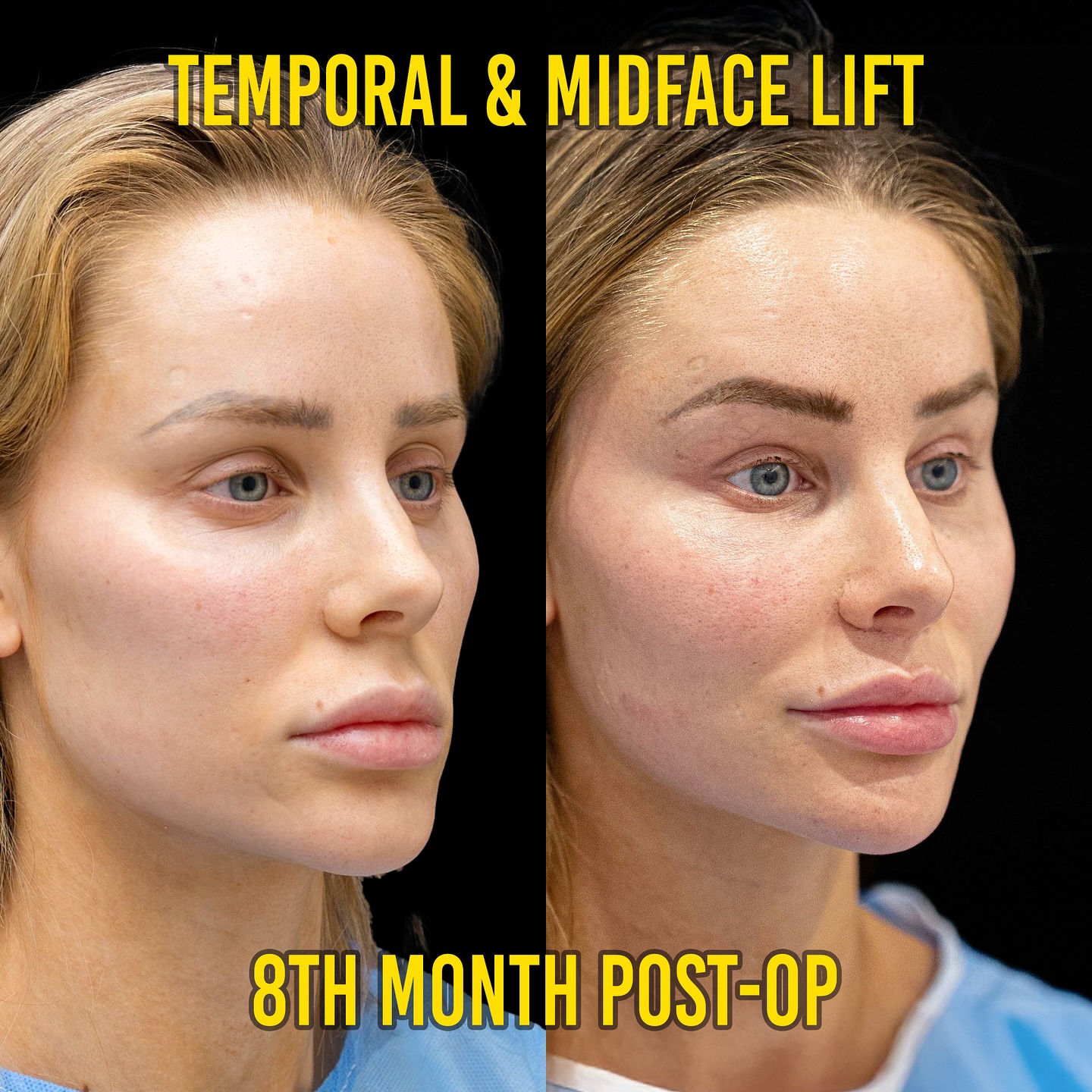
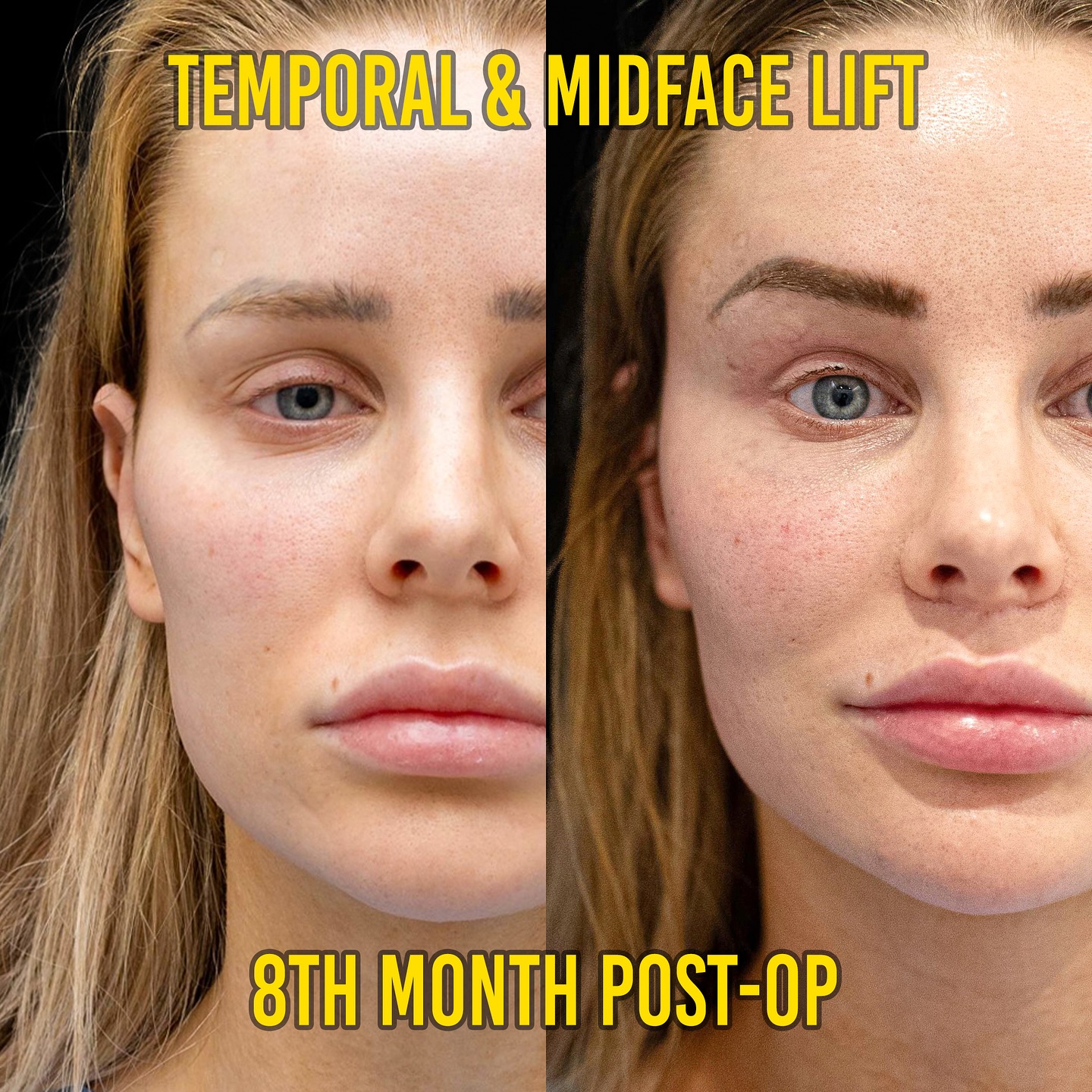
The face is often one of the first areas where the aesthetic effects of significant weight loss become noticeable.
Loss of fat volume in the cheeks, temples, around the eyes and along the jawline may contribute to:
-
Hollow cheeks
-
Under-eye or orbital hollowing
-
Loss of volume in the temples
-
More prominent nasolabial folds
-
Looser skin around the jawline and neck
-
Facial skin laxity
-
A more tired or aged appearance
This phenomenon is commonly referred to in the media as “Ozempic face.”
It is important to clarify that this does not necessarily mean that Ozempic directly damages the skin.
In many cases, the underlying mechanism is a significant or rapid reduction in facial fat volume combined with the inability of the skin and soft tissues to fully adapt to that volume loss.
For this reason, timing becomes particularly important when a patient is considering a facelift or neck lift while actively losing weight.
Can You Use Ozempic or Mounjaro After Plastic Surgery?
The answer also depends on the individual patient.
Imagine, for example, that a patient undergoes a facelift and then begins losing a significant amount of weight again after surgery.
During the operation:
-
Excess skin may have been removed
-
Facial and neck tissues may have been repositioned
-
The jawline may have been refined
-
The soft tissues may have been lifted and reshaped
However, if substantial weight loss continues after surgery, the volume and position of the tissues can change again.
Plastic surgery is not simply about tightening the skin. The procedure is designed to create a balanced result based on the patient's existing facial and body structure.
Continued major weight loss can alter that balance.
The same principle applies to the breasts and other areas of the body
This issue is not limited to facial surgery.
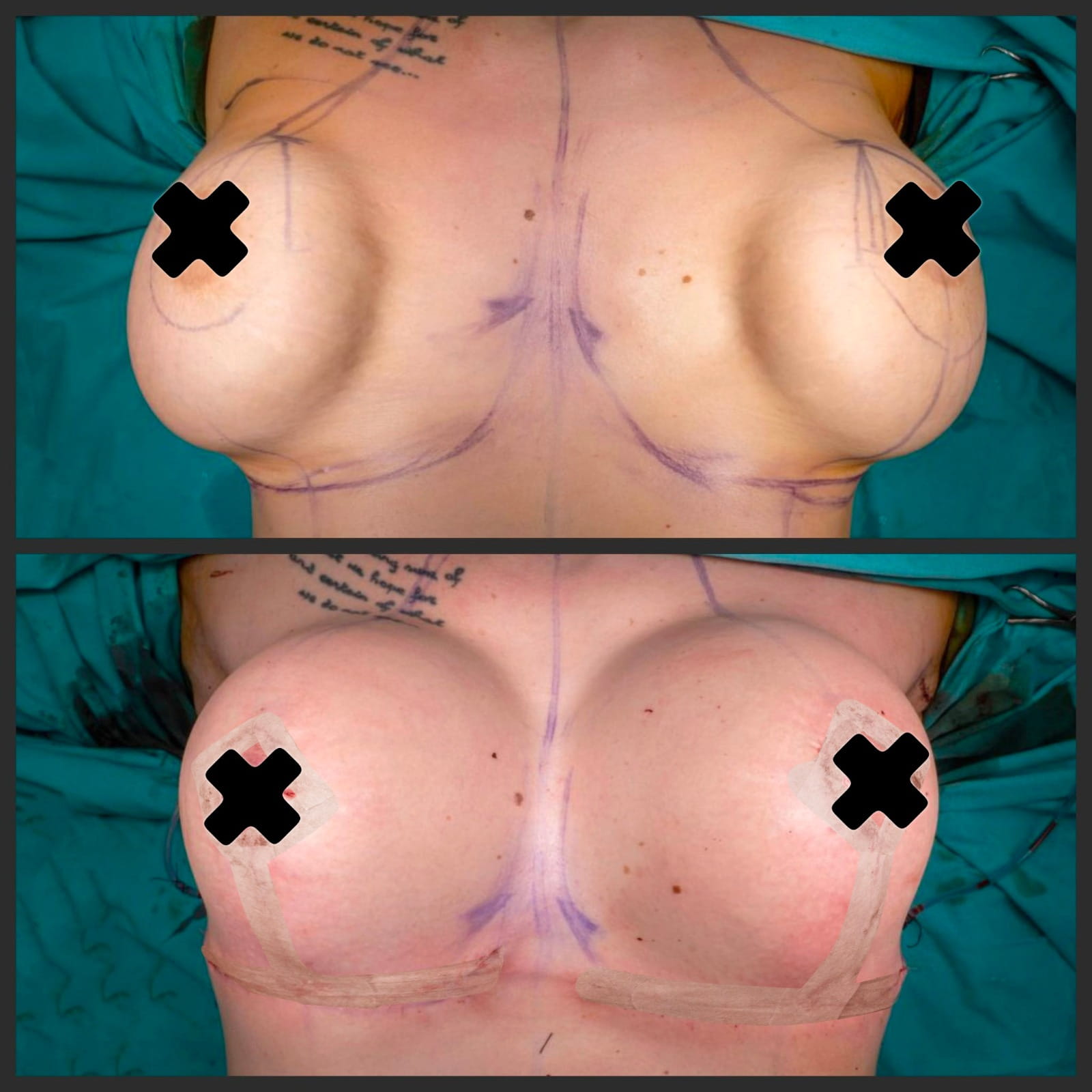
For example, significant weight loss after a breast lift or breast reshaping procedure may lead to:
-
Reduced breast volume
-
Loss of upper-pole fullness
-
Increased skin laxity
-
Changes in breast shape
-
Recurrent downward displacement of breast tissue
Similar changes can occur in the abdomen, arms, thighs and buttocks after significant weight loss.
This is one of the reasons why body contouring procedures are frequently considered after major weight loss: excess and loose skin may remain after the body has become significantly smaller.
When Is the Right Time for Plastic Surgery?
From a plastic surgery perspective, one of the most predictable scenarios is when the patient has reached their target weight and maintained a relatively stable weight.
For patients planning to lose a significant amount of weight, it may be preferable to complete the weight-loss process first, allow the body to adapt to its new weight, and then plan the appropriate plastic surgery procedures.
Therefore, instead of asking only:
“How many days before surgery should I stop Ozempic?”
it is also important to ask:
“Has my weight-loss treatment actually reached its goal?”
If the answer is no, the timing of elective plastic surgery may need to be reconsidered.
What About Peptide Treatments and Plastic Surgery?
The term “peptide” refers to a very broad group of substances, and not all peptides have the same effects.
For this reason, it is not appropriate to establish one universal surgical rule for all peptide treatments without knowing the exact product, ingredients, dosage and purpose of treatment.
Weight-loss treatments that act through GLP-1 or GIP pathways require particular consideration because of their effects on gastric emptying and because of the tissue changes associated with ongoing weight loss.
If you are using any peptide, GLP-1 medication or weight-loss product, you should always inform your plastic surgeon and anesthesiologist before surgery.
What Is the Best Approach to Weight-Loss Treatment After Plastic Surgery?
From an aesthetic surgery perspective, an important principle is:
Whenever medically appropriate, complete the major weight-loss phase before undergoing elective body-contouring or facial surgery.
If a patient needs to remain on GLP-1 or similar treatment long term for medical reasons, the situation should be evaluated individually. For some patients, these medications are not simply cosmetic weight-loss tools; they may be an important part of managing obesity, diabetes or cardiometabolic health.
However, if the goal is to reach a particular weight and the patient is expected to continue losing weight rapidly after surgery, the eventual surgical result may be affected.
Ideally, the patient should transition to a stable and sustainable lifestyle that can be maintained after surgery, with adequate nutrition and protein intake, preservation of muscle mass where possible, and long-term weight stability.
The success of plastic surgery is not determined solely by what happens in the operating room.
How the body changes after surgery can be just as important as the surgery itself.
Conclusion: Can You Have Plastic Surgery While Taking Ozempic or Mounjaro?
Yes, patients taking Ozempic, Mounjaro or similar medications can undergo plastic surgery. However, the ideal timing of surgery is different for every patient.
Three key factors should be considered:
1. Anesthesia safety
GLP-1/GIP medications can slow gastric emptying. Therefore, all medications should be disclosed to the anesthesia team before surgery. Whether treatment should be continued or temporarily interrupted should be determined according to the patient's individual risk profile.
2. Completion of the weight-loss process
If weight loss is still ongoing, the result of elective plastic surgery may be affected by further changes in body weight and tissue volume.
3. Long-term weight stability
After procedures such as a facelift, neck lift, breast lift or body contouring surgery, rapid and substantial weight loss can lead to renewed tissue laxity and loss of volume.
For this reason, patients considering plastic surgery should not focus only on:
“How much weight have I lost?”
The more important question is:
“Have I reached a healthy, sustainable weight that I can maintain long term?”
A successful aesthetic result depends not only on choosing the right surgical technique, but also on choosing the right time for surgery.
Good plastic surgery is important. But having that surgery at the right stage of your weight-loss journey is equally important.