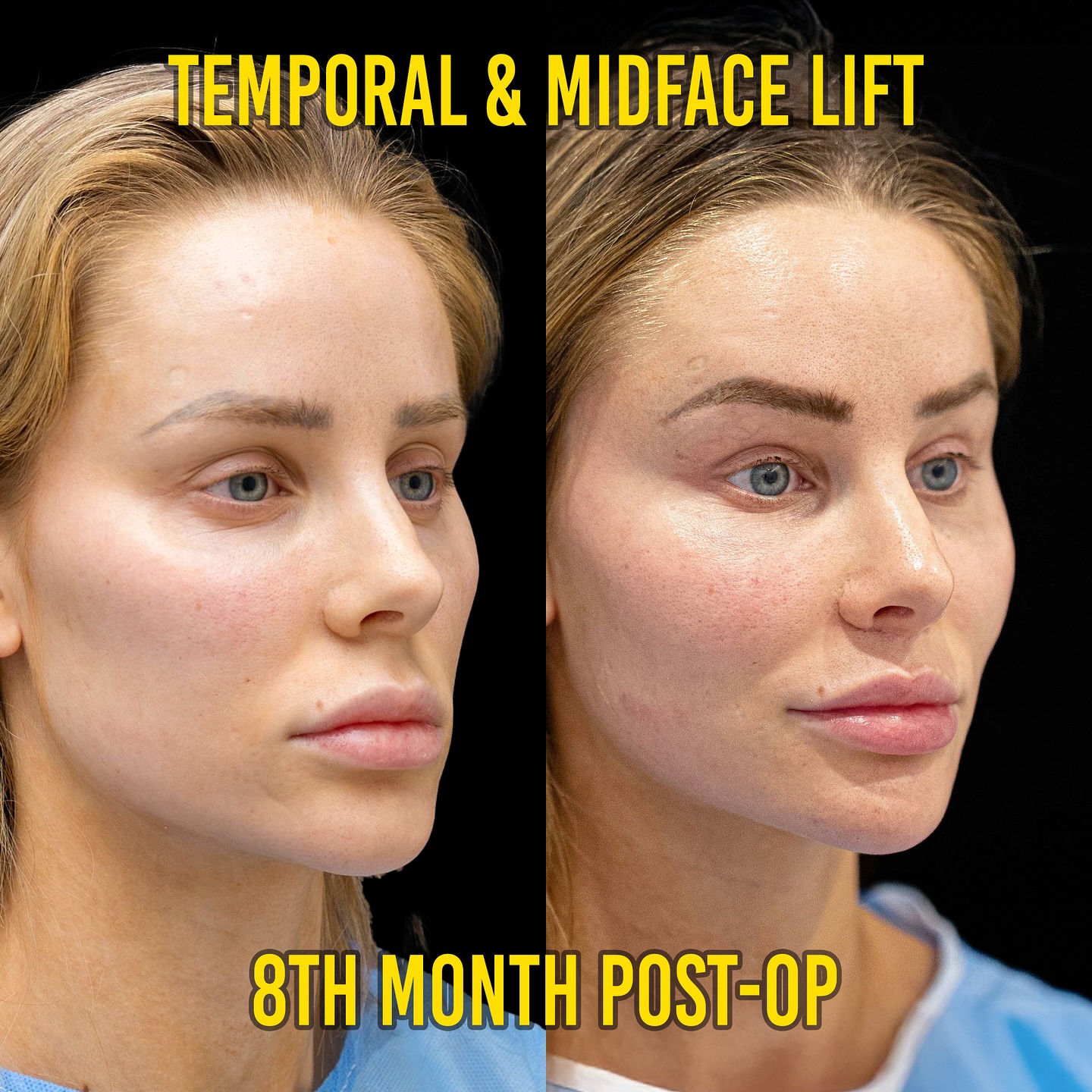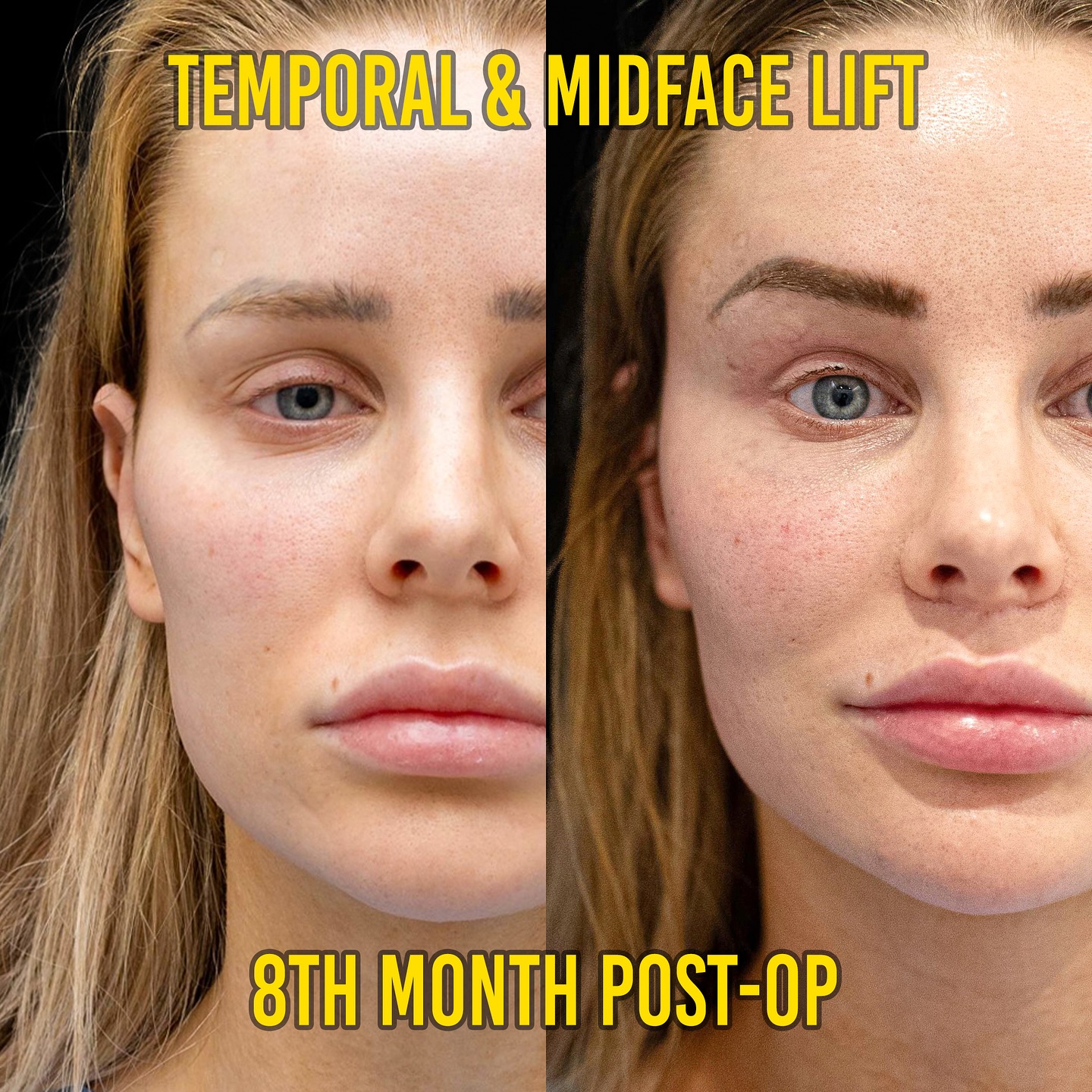






Should Fillers Be Dissolved Before a Facelift or Rhinoplasty? Why Do Plastic Surgeons Prefer Dissolving Fillers Before Surgery?
Why Have Dermal Fillers Become So Popular?
Over the past decade, dermal fillers have become one of the most commonly performed aesthetic procedures worldwide. Because they are non-surgical, require minimal downtime, and provide immediate results, millions of people choose fillers to restore facial volume, soften wrinkles, and achieve a more youthful appearance.
However, the growing popularity of filler treatments does not necessarily mean that their long-term effects receive enough attention. Patients who undergo repeated, high-volume filler injections over many years may present unique challenges if they later decide to undergo facial plastic surgery, particularly facelift surgery or rhinoplasty.
For this reason, one of the most common questions during surgical consultation is:
Should fillers be dissolved before a facelift or rhinoplasty?
In many cases, the answer is yes, but the reasons behind this recommendation are more complex than most patients realize.
Temporary and Permanent Fillers Are Very Different
Not all fillers are the same.
In general, facial fillers can be divided into two main categories:
-
Temporary (dissolvable) fillers
-
Permanent or semi-permanent fillers
Today, hyaluronic acid (HA) fillers are considered the safest and most widely used filler materials. One of their major advantages is that they can usually be dissolved using hyaluronidase when necessary.
Permanent fillers, on the other hand, such as silicone, PMMA, and similar materials, remain within the tissues for many years. They may migrate, trigger chronic inflammatory reactions, become firm over time, and make future surgery considerably more difficult.
For this reason, permanent fillers are generally discouraged in modern aesthetic medicine.
Does Dissolving Fillers Completely Solve the Problem?
Unfortunately, no.
A common misconception is:
"If necessary, fillers can simply be dissolved."
In reality, the situation is far more complicated.
Although hyaluronic acid fillers can often be dissolved successfully, years of repeated filler treatments may permanently alter facial anatomy.
Fillers do not always remain exactly where they were originally injected. Over time, facial movement, gravity, and natural tissue planes may allow filler material to spread beyond its initial location.
As a result, even after dissolving treatment, small amounts of filler may remain in different areas of the face.
More importantly, the biological changes caused by fillers are not limited to the filler material itself. The natural architecture between facial tissue layers may also change over time.
What We See During Surgery Is Often Different From What Patients Expect
One of the most striking observations during facelift surgery involves patients who have previously received large amounts of filler.
Under normal circumstances, the face contains well-defined anatomical tissue planes that allow surgeons to perform safe and precise dissection.
However, after years of repeated filler injections, these natural tissue planes may become significantly altered.
During surgery, residual filler material may sometimes appear as:
-
Mud-like
-
Gelatinous
-
Irregular
-
Fragmented
These materials are often not confined to a single location. Instead, they may be scattered throughout multiple anatomical areas.
As a consequence, normal tissue planes become less distinct, layers may adhere to one another, and surgical dissection becomes considerably more challenging.
This does not simply increase the technical difficulty of surgery—it also makes preserving normal anatomy much more demanding.
Fillers Do More Than Add Volume
Repeated filler treatments do not simply increase facial volume.
Over time, they may also:
-
Alter the natural separation between tissue layers
-
Change connective tissue characteristics
-
Increase tissue edema
-
Affect skin and soft tissue elasticity
Patients who have received high-volume filler treatments over many years may also experience subtle changes in natural facial movement.
For the plastic surgeon, the challenge is therefore not only removing residual filler, but also operating within anatomy that has already been modified.
Why Is This Important Before Rhinoplasty?
Non-surgical nose reshaping using fillers has become increasingly popular.
However, patients planning surgical rhinoplasty should always inform their surgeon if they have previously undergone nasal filler treatments.
The nose has a delicate vascular anatomy.
Residual filler material may spread into different tissue planes or remain as irregular deposits that are not always clinically obvious.
For this reason, evaluating previous nasal filler treatment—and dissolving the filler when appropriate—may significantly improve surgical planning.
Every patient is different.
The amount of filler, the product used, the injection technique, and the number of previous treatments all influence the surgical approach.
What About Biostimulatory Injectables?
In recent years, biostimulatory injectables have become increasingly popular alongside traditional fillers.
Unlike hyaluronic acid fillers, these products primarily work by stimulating collagen production to provide gradual and long-lasting facial rejuvenation.
When used appropriately and in carefully selected patients, they can produce excellent aesthetic results.
However, there is an important consideration.
Much of the volume created by these products is not solely due to the injected material itself, but rather to the fibrotic response and new connective tissue formation they stimulate.
As facial plastic surgeons, we increasingly encounter these changes during facelift procedures.
Normally mobile tissue planes may become firmer.
Dissection can become more resistant.
The natural mobility of facial tissues may decrease.
For this reason, biostimulatory injectables should not automatically be considered completely harmless. Like every aesthetic treatment, they require careful patient selection, appropriate indications, and conservative application.
Are Fillers Bad?
Absolutely not.
The purpose of this article is not to discourage filler treatments altogether.
When performed using the right product, in the right patient, and in appropriate amounts, fillers remain an excellent tool in aesthetic medicine.
The growing concern lies elsewhere.
With the influence of social media, increasingly large volumes of filler are being injected into multiple facial regions during a single treatment session.
These commonly include:
-
Midface
-
Cheeks
-
Jawline
-
Temples
-
Tear troughs
-
Cheekbones
While these treatments may initially create a dramatic appearance, excessive facial volumization can gradually alter the natural anatomy of the face.
Looking younger is not the same as simply adding more volume.
What Is the Safest Approach?
Most experienced facial plastic surgeons today share several common principles:
-
Fillers should be used only when truly indicated.
-
Dissolvable hyaluronic acid fillers are generally preferred.
-
Conservative treatment of localized areas, such as the lips, is usually safer.
-
High-volume filler treatments involving multiple facial regions should be approached cautiously.
-
Excessive facial volumization may compromise future surgical options.
-
Permanent fillers should generally be avoided.
Conclusion
The goal of aesthetic medicine should not only be to improve today's appearance but also to preserve tomorrow's surgical possibilities.
Patients considering facelift surgery or rhinoplasty should always have their previous filler treatments carefully evaluated. When appropriate, dissolving fillers before surgery may help optimize surgical planning. However, it is important to understand that dissolving fillers does not necessarily restore facial anatomy to its original state.
Years of repeated high-volume filler treatments, as well as the indiscriminate use of biostimulatory injectables, may result in more technically demanding facial surgery in the future.
In aesthetic medicine, the best treatment is rarely the one that involves doing more.
It is the one that achieves the desired result while respecting natural anatomy.
Less is more.
Especially when it comes to your face.